

Research suggests that regular moderate to high-intensity exercise can improve executive function in people with ADHD, particularly working memory, inhibitory control, and cognitive flexibility. Exercise supports neuroplasticity and dopamine regulation, which makes it a helpful non-medication strategy.
Does Exercise Really Improve Executive Function in ADHD?
Research suggests it can help. A large review of exercise studies in ADHD found that:
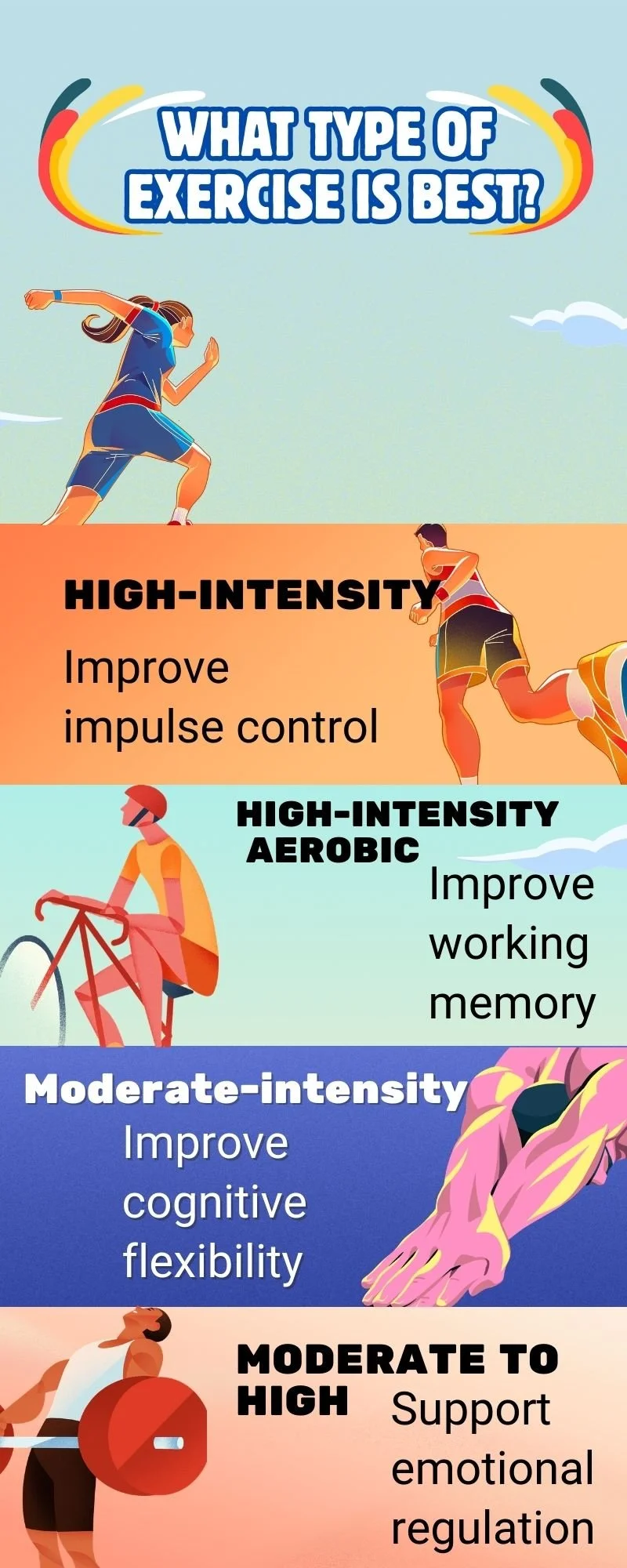
High-intensity exercise showed the strongest effects on working memory and inhibitory control
Moderate-intensity exercise showed the strongest effects on cognitive flexibility
How Does Exercise Help the ADHD Brain?
Exercise:
Increases blood flow to the prefrontal cortex
Supports neuroplasticity
Enhances dopamine and norepinephrine release
Improves impulse control
Strengthens task-switching ability
These brain regions regulate:
Decision-making
Emotional regulation
Focus
Problem-solving
Exercise and Emotional Regulation
Studies suggest exercise can help reduce:
Anxiety
Impulse reactivity
Many adults with ADHD notice that movement helps steady their mood, and it often works well alongside other strategies.
ADHD can affect more than focus. It may also influence sleep, stress, impulsivity, emotional regulation, and long-term health. For a deeper look, read:
A Practical Guide for Parents
For children:
Aim for daily movement before homework.
Consider sports requiring coordination and strategy.
Keep sessions structured but playful.
Avoid framing exercise as punishment.
For many children, movement before school helps them feel more settled for the day.
A Practical Guide for ADHD Adults
For adults:
Use short, high-intensity bursts if time is limited
Pair movement with transitions (before deep work)
Notice emotional shifts post-exercise
Exercise supports executive function, but it is not a cure-all. It works best alongside therapy, structure, and — when appropriate — medication.
Exercise vs Medication: Is It Either/Or?
Not necessarily. Stimulant medications can improve executive function for many people, and exercise supports similar brain systems. For many people, a combined approach works best. If you take medication, talk with your doctor before making any changes.
Frequently Asked Questions
How quickly does exercise help ADHD symptoms?
Some people notice a difference right after activity, while longer-term benefits tend to build with consistency.
What if I struggle with motivation?
Start small. Even 10 minutes of movement can help shift your focus and energy.
Support for Parents and Adults With ADHD
I’m Shadan Mosavat, a Registered Clinical Counsellor (RCC) and Canadian Certified Counsellor (CCC) offering virtual counselling across British Columbia. If you’d like help building movement and structure into your life in a way that fits you, learn more about my adult ADHD counselling or Book a consultation.
